admin
Why Your Hair Type Is the Most Important Thing to Know<\/h2>
Think about how many hair products are on the market. Hundreds of shampoos, conditioners, serums, and treatments — each promising to give you beautiful hair. But here’s the problem: what works perfectly for one person can completely ruin another person’s hair.<\/p>
The reason? Hair type.<\/strong> Knowing your hair type isn’t just a fun fact — it’s the foundation of every good hair care decision you’ll ever make.<\/p>
The André Walker Hair Typing System<\/h2>
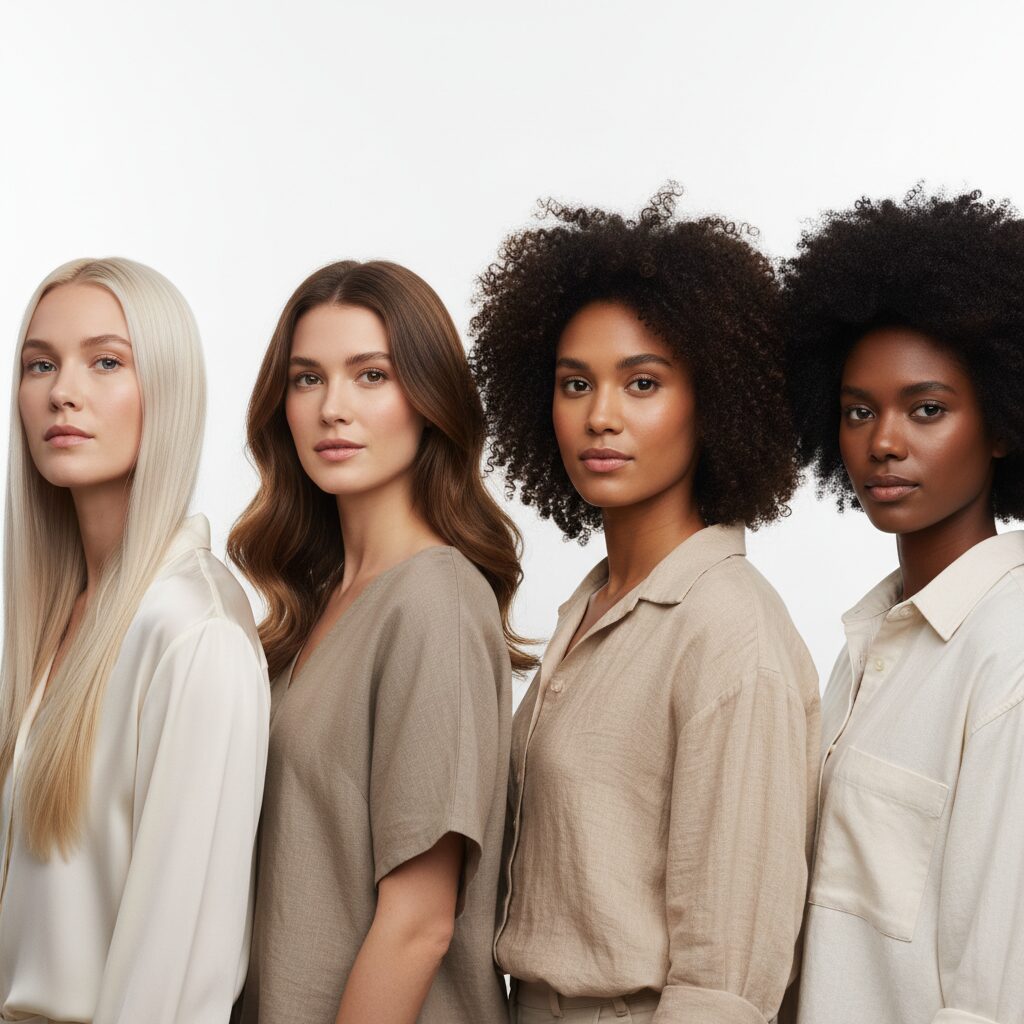
The most widely used system for classifying hair was developed by André Walker, the celebrity stylist behind Oprah Winfrey’s iconic looks. His system divides all hair into 4 main types<\/strong>, each with subtypes (a, b, c) based on how much curl or wave is present.<\/p>
Type 1 — Straight Hair<\/h2>
Straight hair lies completely flat from root to tip, with no natural curl or wave.<\/p>
- 1a<\/strong> — Very fine and silky, tends to get oily quickly<\/li>
- 1b<\/strong> — Medium texture with a slight bend at the ends<\/li>
- 1c<\/strong> — Coarser and thicker straight hair with minimal body<\/li>
<\/ul>Care tips for Type 1:<\/strong> Avoid heavy oils and thick conditioners — they weigh straight hair down and cause greasiness. Use lightweight, volumizing products. Dry shampoo is your best friend.<\/p>
Type 2 — Wavy Hair<\/h2>
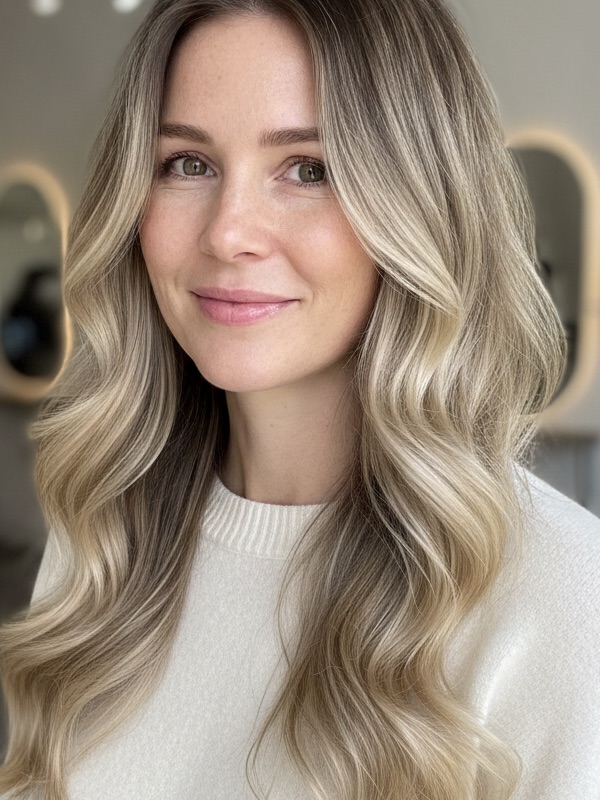
Wavy hair forms a loose S-shape. It’s the most versatile type — it can be styled straight or enhanced into more defined waves.<\/p>
- 2a<\/strong> — Loose, barely-there waves, easy to straighten<\/li>
- 2b<\/strong> — More defined S-waves, tends to frizz in humidity<\/li>
- 2c<\/strong> — Strong waves approaching a curl, often thick and prone to frizz<\/li>
<\/ul>Care tips for Type 2:<\/strong> Scrunch in a light mousse or curl cream while hair is wet. Avoid touching it while it dries — this breaks the wave pattern and creates frizz. Diffuse instead of blow-drying straight.<\/p>
Type 3 — Curly Hair<\/h2>
Curly hair forms a clear spiral or ringlet pattern. It’s prone to dryness because natural oils from the scalp have difficulty traveling down the curved hair shaft.<\/p>
- 3a<\/strong> — Large, loose curls (about the diameter of a wine cork)<\/li>
- 3b<\/strong> — Springy, tighter ringlets (diameter of a marker pen)<\/li>
- 3c<\/strong> — Very tight corkscrews with high density<\/li>
<\/ul>Care tips for Type 3:<\/strong> Moisture is everything. Deep condition weekly. Use the Curly Girl Method<\/a> — avoid sulfates, silicones, and heat styling without a diffuser.<\/p>
Type 4 — Coily \/ Afro Hair<\/h2>
Coily hair has very tight curl patterns that can appear zigzag or spring-shaped. It’s the most fragile hair type and requires the most moisture.<\/p>
- 4a<\/strong> — Defined coils with an S-pattern, about the diameter of a crochet needle<\/li>
- 4b<\/strong> — Z-shaped zigzag pattern with less defined curl<\/li>
- 4c<\/strong> — Very tight coils with minimal definition, most prone to shrinkage and dryness<\/li>
<\/ul>Care tips for Type 4:<\/strong> Co-wash (conditioner-only washing) 1-2x per week. Apply products in sections while hair is soaking wet. Protective styles (braids, twists) reduce breakage. Never brush dry.<\/p>
How to Find Your Hair Type<\/h2>
The easiest way to determine your hair type: wash your hair with a simple, no-frills shampoo and conditioner. Then let it air dry completely without touching it.<\/strong> What you see is your natural hair pattern.<\/p>
A few important notes:<\/p>
- Most people have multiple types<\/strong> on their head — often curlier at the back, wavier at the front<\/li>
- Your hair type can change over time<\/strong> due to hormones, aging, or chemical treatments<\/li>
- Hair texture (fine\/medium\/coarse) and porosity matter just as much as curl pattern<\/li>
<\/ul>Hair Porosity: The Missing Piece<\/h2>
Hair type tells you the shape, but porosity<\/strong> tells you how your hair absorbs and holds moisture. You can be a 3b with low porosity (which needs lightweight, warm water to open cuticles) or high porosity (which needs heavy creams to seal moisture in).<\/p>
Quick porosity test:<\/strong> Drop a clean strand of hair into a glass of water. If it sinks quickly → high porosity. Floats → low porosity. Sinks slowly → medium porosity.<\/p>
Your Routine at a Glance<\/h2>
Type 1 — Straight<\/strong>
Type 2 — Wavy<\/strong>
Type 3 — Curly<\/strong>
Type 4 — Coily<\/strong>
Still Not Sure? Get a Professional Assessment<\/h2>
If you’re still unsure about your hair type, or if you want a personalized routine built around your specific hair, our stylists at Kapsalon Haarvisie<\/a> (Rijswijk & Wateringen) can help. We analyze your hair type, porosity, and texture and put together a routine that actually works for you.<\/p>
Book a hair consultation — and stop guessing about your hair.<\/em><\/p>
- Your hair type can change over time<\/strong> due to hormones, aging, or chemical treatments<\/li>
- 4b<\/strong> — Z-shaped zigzag pattern with less defined curl<\/li>
- 3b<\/strong> — Springy, tighter ringlets (diameter of a marker pen)<\/li>
- 2b<\/strong> — More defined S-waves, tends to frizz in humidity<\/li>
- 1b<\/strong> — Medium texture with a slight bend at the ends<\/li>